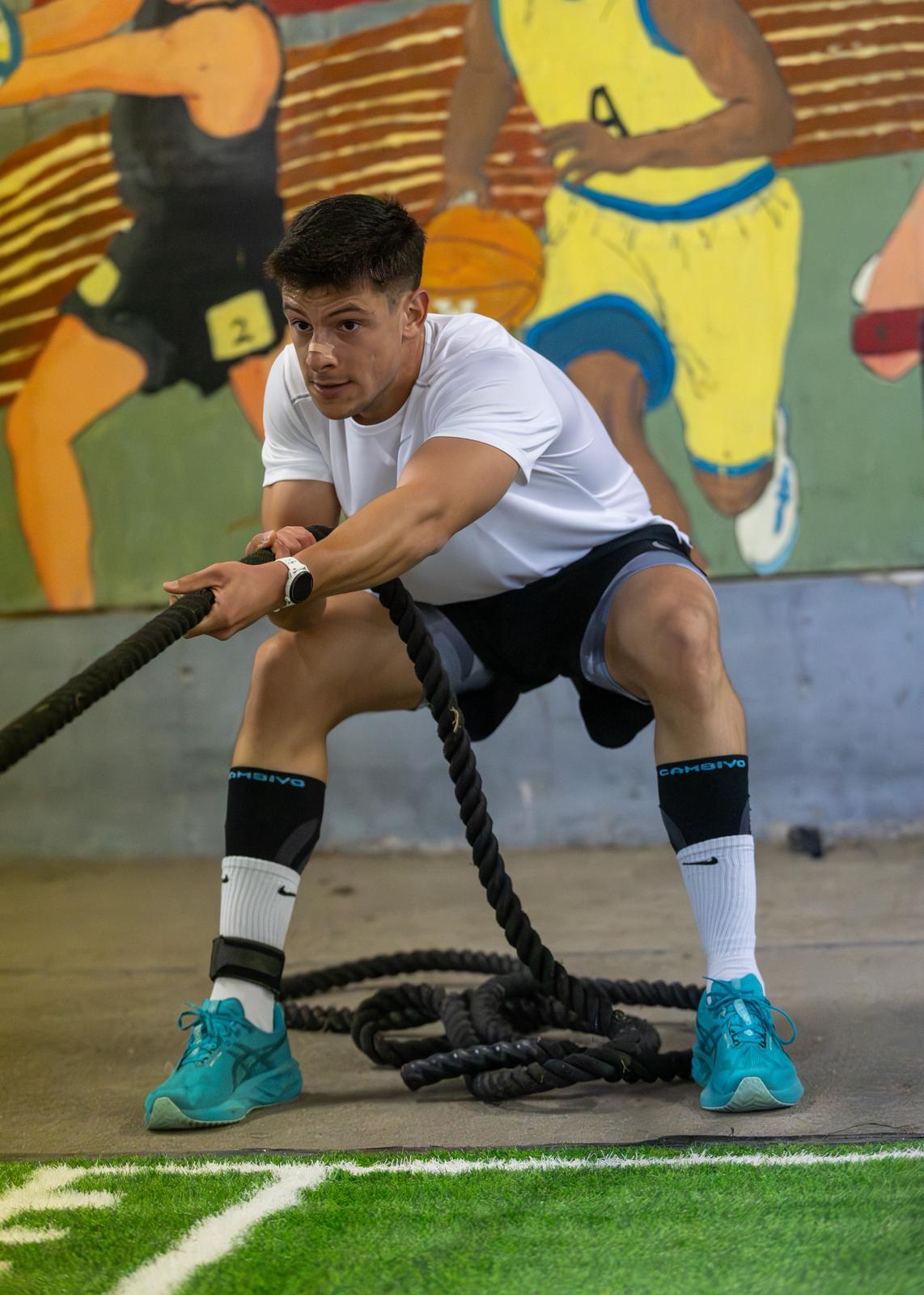
I'm a Digital Project Manager with a background in Computer Engineering, shaped by teamwork, technology and a strong belief that great work happens when people move towards a shared goal.
Project management is not just about managing projects. It is about understanding people and aligning them towards a shared goal.
Long before I worked in technology, I learned my first lessons about teamwork on a basketball court.
I started playing basketball when I was eight years old and spent more than fifteen years competing at federated level, playing regional and national tournaments, and eventually competing in Spain's Segunda División B. During many of those years I also had the responsibility of being team captain.
Basketball taught me something that has shaped the way I think about work ever since.
Talent matters, but cohesion wins.
Some of the most memorable games we won were the ones where we were clearly not the favourites. On paper, the opposing team had more talent, more individual skill, and sometimes more experience. But a united team — a locker room that trusts each other — can outperform teams that look stronger individually.
Those years taught me that success rarely comes from individual brilliance alone. It comes from alignment, trust and shared effort. That idea stayed with me long after I left the court.
My interest in technology started during high school, through subjects like technology and computer science. What began as curiosity quickly turned into a genuine interest in how digital systems are built.
That interest led me to study Computer Engineering, where I developed a technical foundation that later became extremely valuable in my career.
My first professional role was as a Drupal developer, working on digital platforms for public organisations. I enjoyed the technical challenge, but over time I realised something about myself.
What I enjoyed most was not just writing code — it was coordinating people, aligning ideas and driving projects forward.
That realisation naturally led me towards project management, a space where I could combine three things that interested me deeply:
A technical background that informs how I think about digital systems and what is actually possible.
Connecting technical execution to real outcomes — revenue, efficiency, user experience.
The belief that great results come from aligned, motivated teams — not individual effort alone.
Today, as a Digital Project Manager, my work often sits at the intersection of those three worlds.
Many people think project management is mainly about processes, planning or frameworks.
In my experience, the real challenge is much more human.
Projects bring together people with different perspectives, motivations, constraints and expectations. Engineers, designers, stakeholders and clients all approach problems differently. A large part of the role is understanding those differences and aligning them towards a common goal.
That often means:
Mediating between perspectives
Managing expectations
Navigating uncertainty
Building trust within teams
Project management is rarely just about managing projects. It is about managing people, energy and direction.
And that is the part of the work that I find most meaningful.
Running taught me something I didn't expect to learn from sport: the difference between wanting something and building the conditions to actually get it. Training for a marathon isn't about being motivated on race day. It's about showing up on the days when you're not. The goal is fixed; the system is what gets you there.
The idea is straightforward. If you improve 1% every day — in fitness, in a skill, in how you work — the compound effect over months is significant. Not because of any single effort, but because of the accumulation of consistent, small actions aligned with a clear direction. What matters isn't the size of each step, but that you keep taking them.
I've found this principle carries into work in a very practical way. Sustainable delivery doesn't come from pushing harder in the final week. It comes from the habits, routines and processes built before the pressure arrives — the decisions made when there's still time to make them well.
Progress rarely comes from bursts of motivation. It comes from structures that support consistent effort over time. A system you can follow on a bad day is more valuable than a perfect plan you abandon when things get hard.
Once the system is defined, the work becomes simple: show up and execute. The goal is to improve just a little every day.
Systems should evolve when necessary, but always with the long-term objective as the reference point. Adjusting the plan is not failure — it is part of progress.
Beyond work and sport, I am naturally curious. I enjoy learning about topics related to technology, human behaviour, and performance and personal development.
Understanding how people think, what motivates them and how teams function has become an important part of how I approach leadership and collaboration.
A principle I strongly believe in is simple:
You cannot lead others if you cannot lead yourself.
Self-awareness, discipline and continuous learning are essential if you want to guide teams effectively.
Today I work as a Digital Project Manager, coordinating complex digital initiatives across consulting environments and multiple industries.
My role often involves acting as a bridge between business goals and technological execution, helping teams move from ideas to real outcomes.
What motivates me most about this work is not just delivering projects. It is building the conditions that allow teams to do their best work together.
Because in the end, whether in sport or in technology, the principle remains the same: great results are rarely achieved alone.